Breaking Down the Tech Transforming Everything
1 Introduction: Welcome to the Age of Ubiquitous Intelligence
Artificial intelligence has marched out of research labs and into the bloodstream of everyday technology. It’s in your phone, your car, your job, your refrigerator—and, let’s be honest, probably judging your Spotify playlists. But this moment isn’t just another wave of hype. Unlike earlier eras when AI felt like vaporware with a cool name, today’s systems are actually reshaping how humans work, build, and create.
What makes this era different? Scale, accessibility, and real-world usefulness. Models can reason, generate, summarize, plan, see, hear, and act. They’re not perfect—far from it—but they’ve crossed the threshold from “interesting lab trick” to “societal inflection point.” The AI revolution is no longer theoretical. We’re living inside it.
2 The Four Big Pillars of Modern AI
These aren’t the only categories that matter, but they’re the ones doing most of the heavy lifting behind the shift happening right under our noses.
2.1 Large Language Models (LLMs)
Think of LLMs as the brainy chatterboxes of the AI universe. They’re trained on vast oceans of text and learn statistical patterns that let them generate eerily human-like language. Under the hood are transformer architectures—matrices and attention mechanisms humming along faster than your last attempt at mental math.
Where they shine: coding help, writing, answering questions, summarizing information, brainstorming, customer support, tutoring, and driving entire task pipelines. Where they struggle: hallucinations, logical inconsistencies, and the occasional act of confidently making something up like a college freshman in a philosophy debate.
Still, LLMs have become the backbone of AI software because they’re flexible, adaptable, and able to generalize across almost any domain.
2.2 Multimodal AI
If LLMs are the talkers, multimodal models are the polymaths. These systems can take in images, audio, video, and text—and respond with a blend of understanding across formats.
This is where AI stops being a clever text autocomplete machine and starts acting more like an actual assistant. You show it a broken appliance; it explains the issue. You upload a contract; it analyzes the risk. You feed it a sketch; it turns it into realistic 3D renders.
Multimodal AI unlocks copilot experiences that feel closer to real collaboration: AI that can look, listen, and act with context. It’s the next major leap, pushing AI directly into visual reasoning, physical-world interaction, and spatial understanding.
2.3 Agentic Systems
Agentic AI shifts the conversation from “AI that talks” to “AI that does.” These systems can plan, execute tasks, interact with tools, make API calls, and handle multi-step workflows without constant hand-holding.
Want a research report? The agent can search, read, summarize, format, and deliver it. Need a marketing workflow automated? It can run the steps across apps. Trying to debug a failing CI pipeline? Good luck—but at least the agent will try.
Agents bring autonomy, but also complexity. They can loop, get stuck, misinterpret goals, or accidentally run into edge cases humans would catch instantly. They’re powerful, but they need oversight and good guardrails.
Still, this is where a lot of the energy in AI is flowing. Agentic systems are redefining productivity, enabling small teams to operate like large ones, and turning AI into the closest thing we’ve had to digital workers.
3. Industries Being Rewritten Right Now
AI isn’t politely waiting at the door; it’s already barged in and started rearranging the furniture across multiple industries.
3.1 Software Development
Developers are seeing the most dramatic shift. Coding copilots now write boilerplate, generate tests, refactor code, and call out bugs faster than human reviewers. Agents can scaffold entire projects, manage dependencies, and run multi-step workflows.
The role of the developer isn’t disappearing—but it is evolving from “type code” to “design intent, review intelligently, and orchestrate systems.” The engineer who masters AI-enhanced tooling will run circles around those who ignore it.
3.2 Healthcare
AI-driven diagnostics are spotting early disease indicators in scans, blood tests, and genetic patterns. Clinical copilots help doctors summarize charts, prep documentation, and triage patients faster.
But this is also one of the most regulated domains for good reason. Bias, validation, privacy, and life-or-death consequences mean AI’s impact will be slower and more heavily scrutinized—but the upside is enormous.
3.3 Creativity & Media
Images, video, music, and writing are all being remixed by generative models. AI tools empower solo creators to produce studio-quality work. Marketing teams are accelerating from concept to finished assets in minutes.
At the same time, the line between authentic and synthetic content is blurring, sparking debates on copyright, originality, and digital signatures.
3.4 Business & Productivity
Every business is quietly becoming an AI business. From analytics copilots to fully automated workflows, AI is reducing friction, cutting costs, and amplifying output across departments.
Finance, marketing, HR, operations—all are being reshaped. The companies that adapt early will have a compounding advantage.
3.5 Robotics & Autonomous Systems
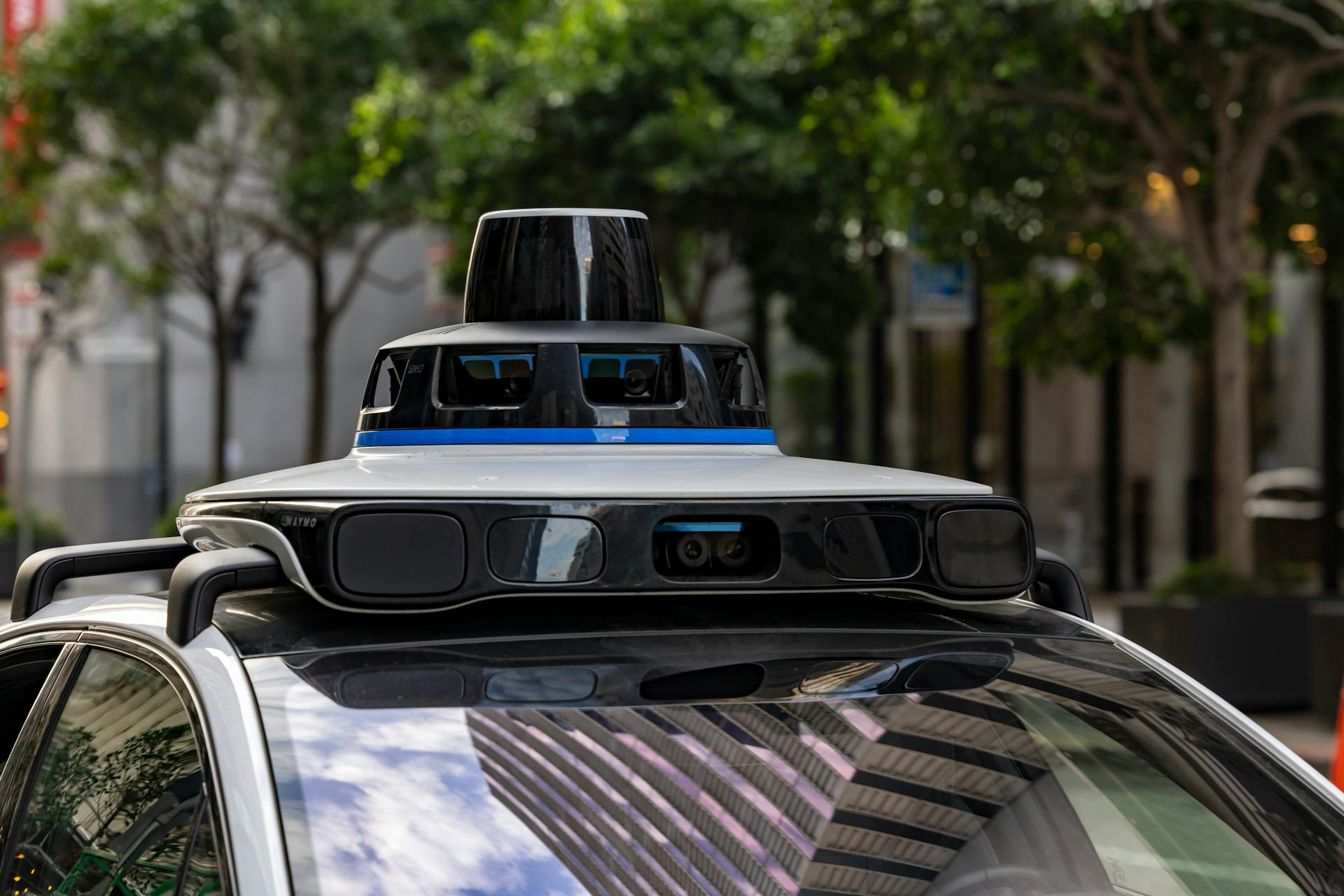
AI is spilling into the physical world. Warehouses are increasingly robotic. Cars are learning to drive. Drones are stepping into dangerous environments. Home robotics is having a renaissance.
These systems merge perception, planning, and control—and multimodal models are accelerating breakthroughs. The real-world bottleneck is reliability and safety, not capability.